Future Architecture: A Complete Guide to the Homes of Tomorrow

Discover the future of architecture, from organic and biomorphic homes to sustainable design, smart technology, and nature-inspired living spaces.
What will our homes look like in the future?
Will they be sleek glass structures powered by artificial intelligence? Organic buildings that blend seamlessly into forests? Or perhaps homes with unusual forms inspired by mushrooms, shells, plants, and other elements of nature?
Future architecture explores these possibilities and challenges the way we think about buildings, homes, and the spaces in which we live.
Rather than being limited to science-fiction concepts, future architecture is increasingly connected to real-world ideas such as sustainability, smart technology, flexible living, natural materials, and closer relationships between architecture and nature.
From minimalist forest retreats to biomorphic houses with unconventional forms, the architecture of tomorrow may be less about creating buildings that simply look futuristic—and more about creating spaces that respond intelligently to people and their environment.
In this guide, we explore the key ideas, styles, and trends shaping future architecture and future homes.
What Is Future Architecture?
Future architecture refers to architectural ideas and approaches that explore how buildings and living spaces could evolve in response to changing technology, environmental challenges, lifestyles, and human needs.
It can include futuristic visual styles, but appearance is only one part of the concept.
A future home might feature:
Sustainable materials
Smart home technology
Energy-efficient systems
Organic architectural forms
Flexible spaces
Natural ventilation and lighting
AI-assisted systems
Integration with surrounding landscapes
Minimalist interiors
Innovative construction methods
This means that a building does not have to look like a spaceship to be considered futuristic.
A simple wooden home surrounded by trees, for example, can represent future architecture if its design uses sustainable materials, intelligent energy systems, passive climate strategies, and a strong connection with nature.
The architecture of the future is ultimately about rethinking how buildings work, not simply making them look unusual.
Key Characteristics of Future Architecture
Although future architecture can take many forms, several characteristics appear repeatedly across futuristic residential design.
1. Organic and Biomorphic Forms
One of the most recognizable directions in futuristic architecture is the use of organic and biomorphic forms.
Instead of relying entirely on conventional rectangular structures, architects and designers experiment with:
Curved walls
Rounded roofs
Sculptural structures
Shell-like forms
Mushroom-inspired buildings
Fluid transitions between spaces
These shapes can make architecture feel more connected to natural environments.
Mushroom-Inspired Architecture
Mushrooms are an interesting source of inspiration because their forms naturally combine curves, structural efficiency, and visual softness.
Futuristic homes inspired by mushrooms can create an almost otherworldly appearance while still feeling connected to the landscape.
For example, a dark mushroom-inspired villa hidden within a forest can combine dramatic architecture with a natural setting.
Explore: Mushroom-Inspired Luxury Villa: A Mysterious Black Retreat Hidden in the Forest

2. Architecture Inspired by Nature
Another important direction in future architecture is the relationship between buildings and nature.
Instead of treating nature as something outside the building, future homes may attempt to integrate it directly into the architectural experience.
This can include:
Forest settings
Indoor gardens
Green roofs
Natural water features
Large glass openings
Natural materials
Landscape-integrated structures
The goal is not simply to place a modern house in a beautiful environment.
It is to make the building and environment feel like part of the same system.
Forest Architecture
A forest villa is a good example of this approach.
Rather than competing with its surroundings, the architecture can use warm wood, glass, natural stone, and carefully positioned openings to create a strong connection with the trees and landscape.
Explore: Forest Villa Architecture: A Unique Retreat Where Modern Design Meets Nature

3. Minimalist Future Homes
Futuristic architecture is often associated with complex shapes and advanced technology.
However, another important direction is minimalism.
Future homes may become simpler rather than more complicated.
Clean architectural lines, open spaces, natural materials, and carefully controlled lighting can create homes that feel futuristic without relying on excessive decoration.
Warm wood is particularly interesting in this context.
While futuristic design is often associated with metal, glass, and cold surfaces, wood can create a warmer and more human atmosphere.
A minimalist future home can therefore combine:
Simple geometry
Warm wood
Large windows
Open-plan spaces
Natural light
Minimal decoration
Integrated technology
Explore: Cozy Minimalist Home with Warm Wood Tones: A Perfect Balance of Simplicity and Comfort

4. Sustainable Future Architecture
One of the most important aspects of future architecture is sustainability.
As environmental challenges become increasingly important, future homes will need to consider not only how they look but also how much energy and resources they consume.
Sustainable future architecture can incorporate:
Solar energy
Passive cooling
Natural ventilation
Energy-efficient windows
Recycled or renewable materials
Green roofs
Rainwater collection
Efficient insulation
Landscape integration
The future home may therefore become a system that works with its environment rather than constantly consuming resources from it.

Passive Design
Passive architectural strategies are particularly relevant.
For example, carefully positioning windows can improve natural lighting and ventilation. Roof overhangs can reduce unwanted solar heat. Thermal mass and insulation can help stabilize indoor temperatures.
These ideas may not always produce dramatic visual effects, but they could become some of the most important elements of future residential architecture.
5. Smart Home Architecture
Technology is another major component of future architecture.
The smart home of the future may go beyond controlling lights or adjusting the temperature with a smartphone.
Buildings could increasingly respond automatically to their occupants and surroundings.
Potential systems include:
AI-assisted climate control
Automated lighting
Smart glass
Intelligent security
Energy management systems
Automated shading
Voice-controlled environments
Sensors that monitor indoor conditions

The key idea is responsive architecture.
Instead of the user constantly adjusting the building, the building can adapt to the user's needs.
6. Nature-Integrated Future Homes
Future architecture may also blur the boundary between indoor and outdoor spaces.
Large glass walls, open terraces, courtyards, reflecting pools, gardens, and natural landscapes can create a continuous relationship between architecture and nature.
This approach is especially powerful for residential architecture.
Imagine waking up in a bedroom surrounded by trees, opening a glass wall directly onto a garden, or having water become part of the architectural composition.
In this sense, the future home is not an isolated object.
It becomes part of its ecosystem.

7. Shell-Inspired and Sculptural Architecture
Nature offers countless shapes that can inspire architectural experimentation.
Shells are particularly interesting because they combine structural logic with distinctive visual forms.
A shell-inspired home can use a spiral or curved exterior to create a building that feels almost like a piece of sculpture.
This approach demonstrates an important principle of futuristic architecture:
Architecture does not always have to follow conventional geometric rules.
Instead, designers can explore structures inspired by biological forms, natural growth patterns, and mathematical geometry.
This can result in homes that feel both ancient and futuristic at the same time.
Explore: Shell-Inspired Future Architecture

Different Types of Future Architecture
Future architecture is not one single style.
It is a broad field that includes many different approaches.
Organic Architecture
Buildings use curved forms, natural materials, and shapes inspired by the environment.
Biomorphic Architecture
Architecture takes visual or structural inspiration from living organisms and biological forms.
Sustainable Architecture
The focus is on reducing environmental impact and improving energy efficiency.
Smart Architecture
Technology and intelligent systems are integrated into the building itself.
Minimalist Future Architecture
Simple forms, clean spaces, and carefully selected materials create a futuristic atmosphere.
Nature-Inspired Architecture
Buildings are designed around natural landscapes, ecosystems, plants, water, and organic forms.
Experimental Architecture
Designers push conventional architectural boundaries through unusual structures, materials, and spatial concepts.
These categories often overlap.
A single future home might simultaneously be biomorphic, sustainable, smart, minimalist, and nature-integrated.
What Will Future Homes Look Like?

There is no single answer.
The future of residential architecture will probably not produce one universal style.
Instead, we may see many different interpretations depending on location, climate, technology, culture, and lifestyle.
Some future homes may look:
Organic
with curved walls and biomorphic forms.
Minimalist
with simple geometry, glass, wood, and open spaces.
Technological
with smart systems, adaptive materials, and AI-assisted environments.
Natural
with buildings integrated into forests, mountains, gardens, and water landscapes.
Experimental
with unconventional shapes and construction techniques.
This diversity is what makes future architecture so interesting.
The Role of AI in Future Architecture

Artificial intelligence is also changing how designers imagine future spaces.
AI image-generation tools can help architects, designers, and creatives explore concepts that might be difficult to visualize using traditional methods alone.
A simple idea such as:
"A sustainable forest home inspired by a seashell"
can quickly become a visual architectural concept.
AI can therefore function as a creative exploration tool, helping people experiment with:
Building forms
Materials
Landscapes
Lighting
Interior spaces
Architectural styles
Future living concepts
However, an AI-generated architectural image is primarily a conceptual visualization unless it has been developed and validated through real architectural design and engineering processes.
This distinction is important.
The value of AI in future architecture is not simply creating beautiful images.
It is helping us imagine possibilities.
Why Future Architecture Matters
Future architecture is more than an aesthetic trend.
The way we design buildings affects how people live, how much energy they use, how cities develop, and how architecture interacts with the environment.
As lifestyles change, homes may need to become:
More adaptable
More energy efficient
More connected to nature
More technologically intelligent
More space-efficient
More personalized
At the same time, people will continue to want something that technology alone cannot provide:
a sense of comfort and belonging.
This is why the future of architecture may not be completely dominated by machines, metal, and glass.
Instead, some of the most compelling future homes may combine advanced technology with natural materials, organic forms, warm lighting, and human-centered spaces.

The Future of Architecture: Where Technology Meets Nature
Perhaps the most exciting direction is not choosing between technology and nature.
It is combining them.
Imagine a home with:
AI-controlled energy systems
Solar power
Smart glass
Natural ventilation
A forest integrated into the landscape
Warm timber interiors
Organic architectural forms
Flexible living spaces
This combination could define a new generation of residential architecture.
The future may not be about creating buildings that look less human.
It may be about creating buildings that understand people and their environment better.
Future architecture is not simply about predicting what buildings will look like tomorrow.
It is about exploring new relationships between people, technology, materials, nature, and space.
From mushroom-inspired villas and shell-shaped houses to minimalist forest retreats and intelligent sustainable homes, the possibilities are almost limitless.
Some ideas may eventually become real buildings.
Others may remain experimental concepts.
But every concept gives us an opportunity to ask an important question:
What should the home of the future actually feel like?
At FutureFurni, we explore these possibilities through futuristic architecture, interiors, furniture, and AI-powered design concepts—bringing together imagination and emerging ideas to envision the spaces of tomorrow.
Related Visions
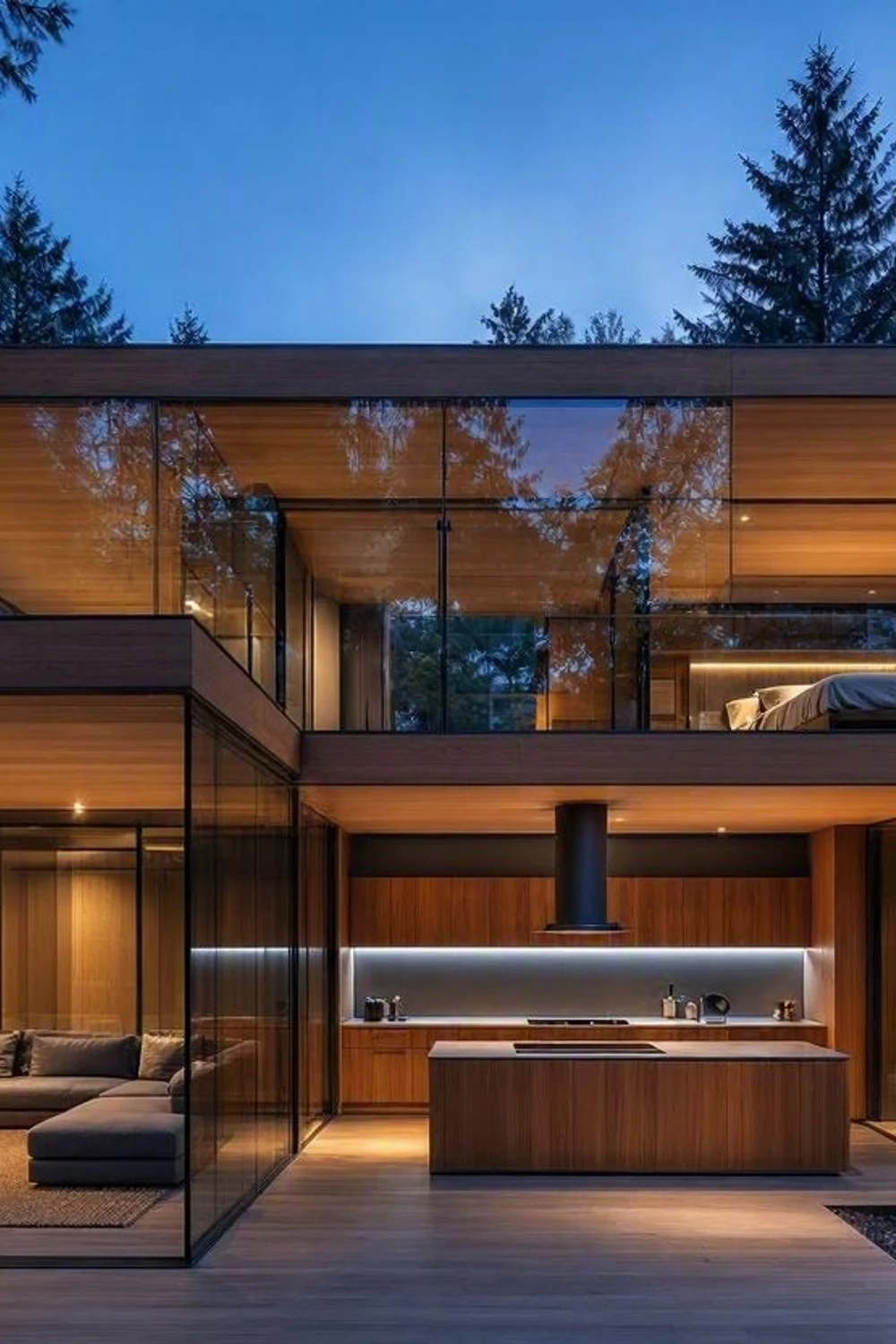
Forest Villa Architecture: A Unique Retreat Where Modern Design Meets Nature
Discover a unique modern forest villa featuring warm wood interiors, floor-to-ceiling glass walls, minimalist architecture, and a seamless connection with nature.
Read More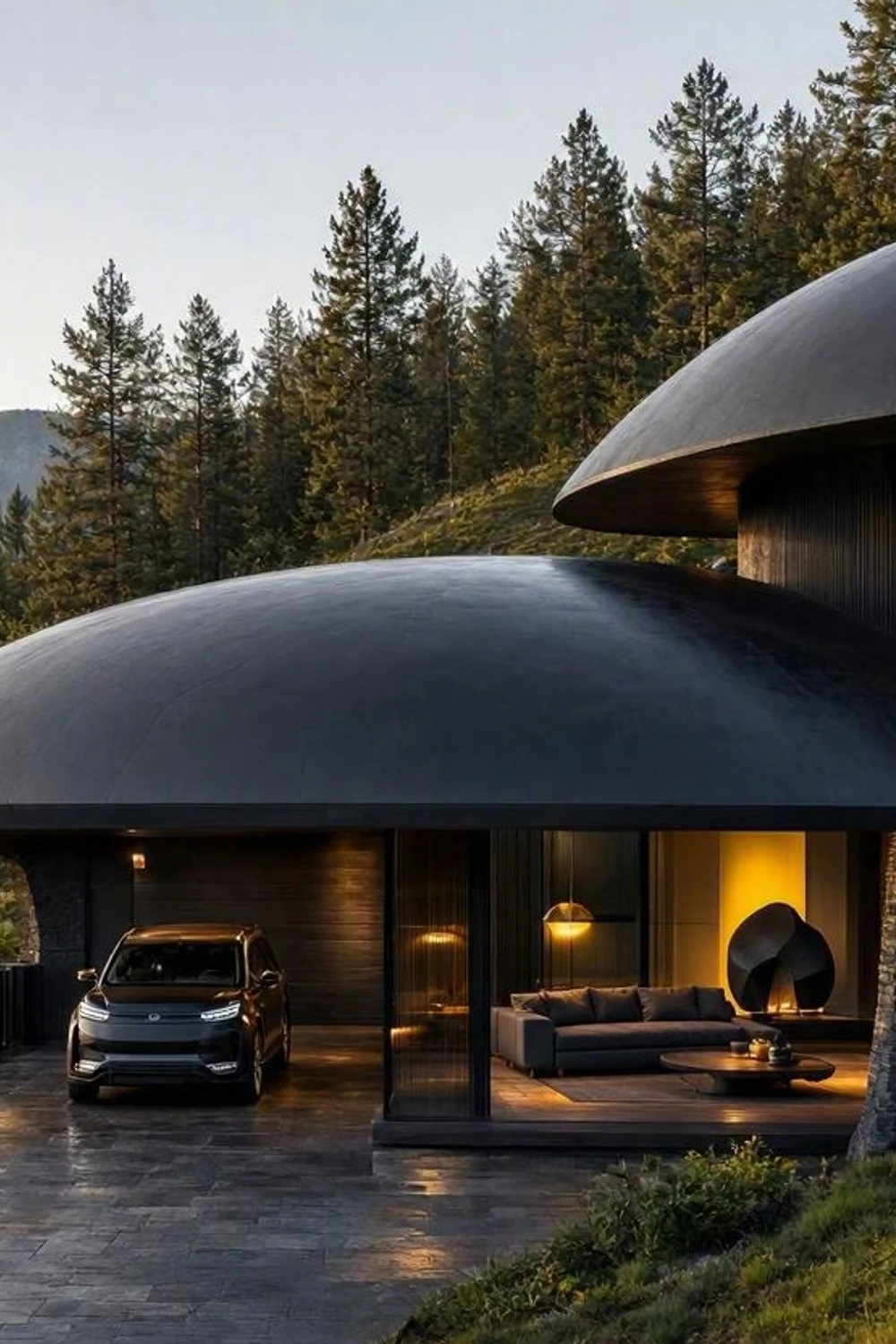
Mushroom-Inspired Luxury Villa: A Mysterious Black Retreat Hidden in the Forest
Discover a luxurious mushroom-inspired villa hidden in the forest, featuring dramatic black architecture, warm wooden interiors, glass walls, and breathtaking natural surroundings.
Read More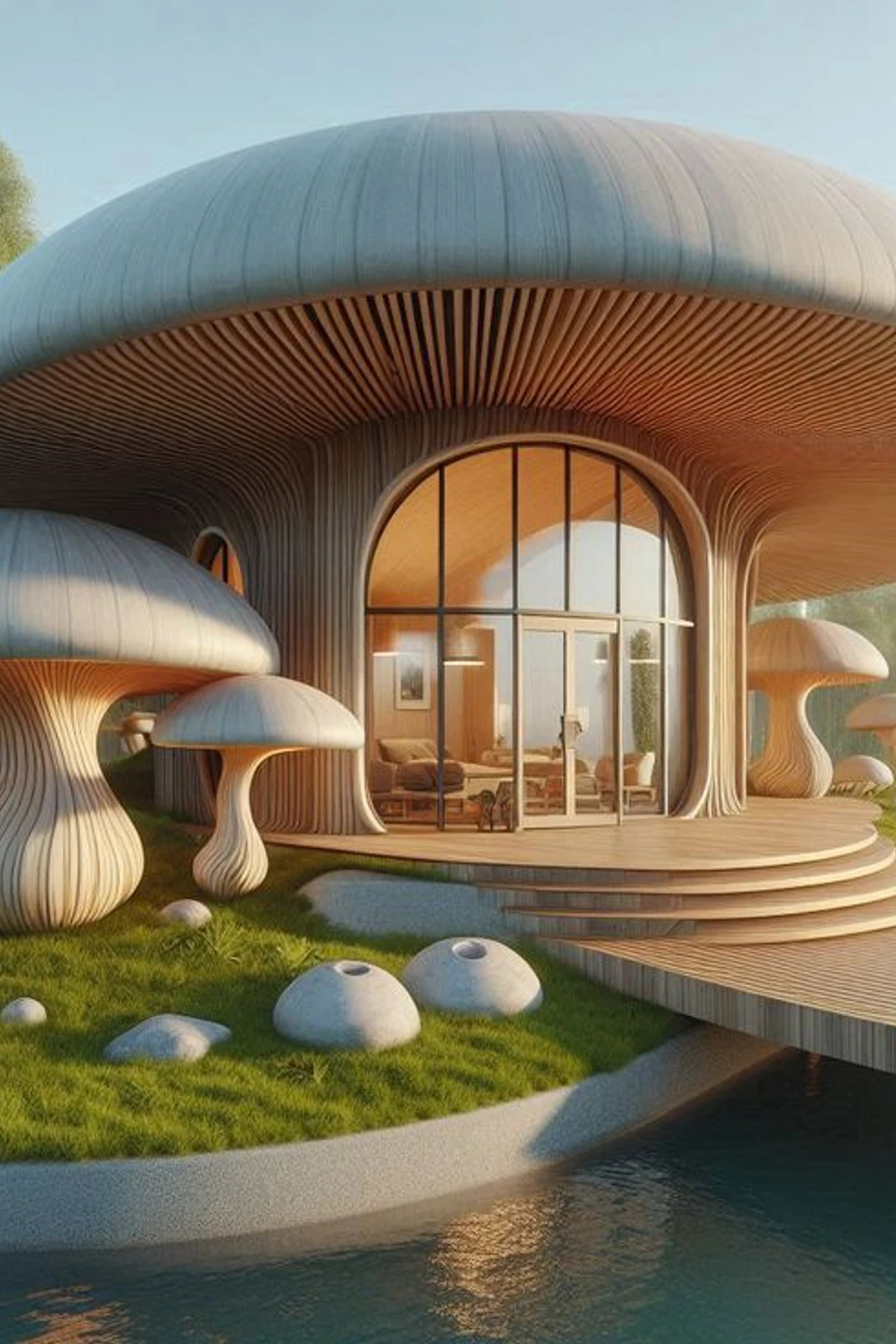
Futuristic Mushroom-Inspired Modern Home Design: Nature Meets the Future
Discover a futuristic mushroom-inspired modern home that blends organic architecture, sustainable living, natural materials, and innovative design.
Read More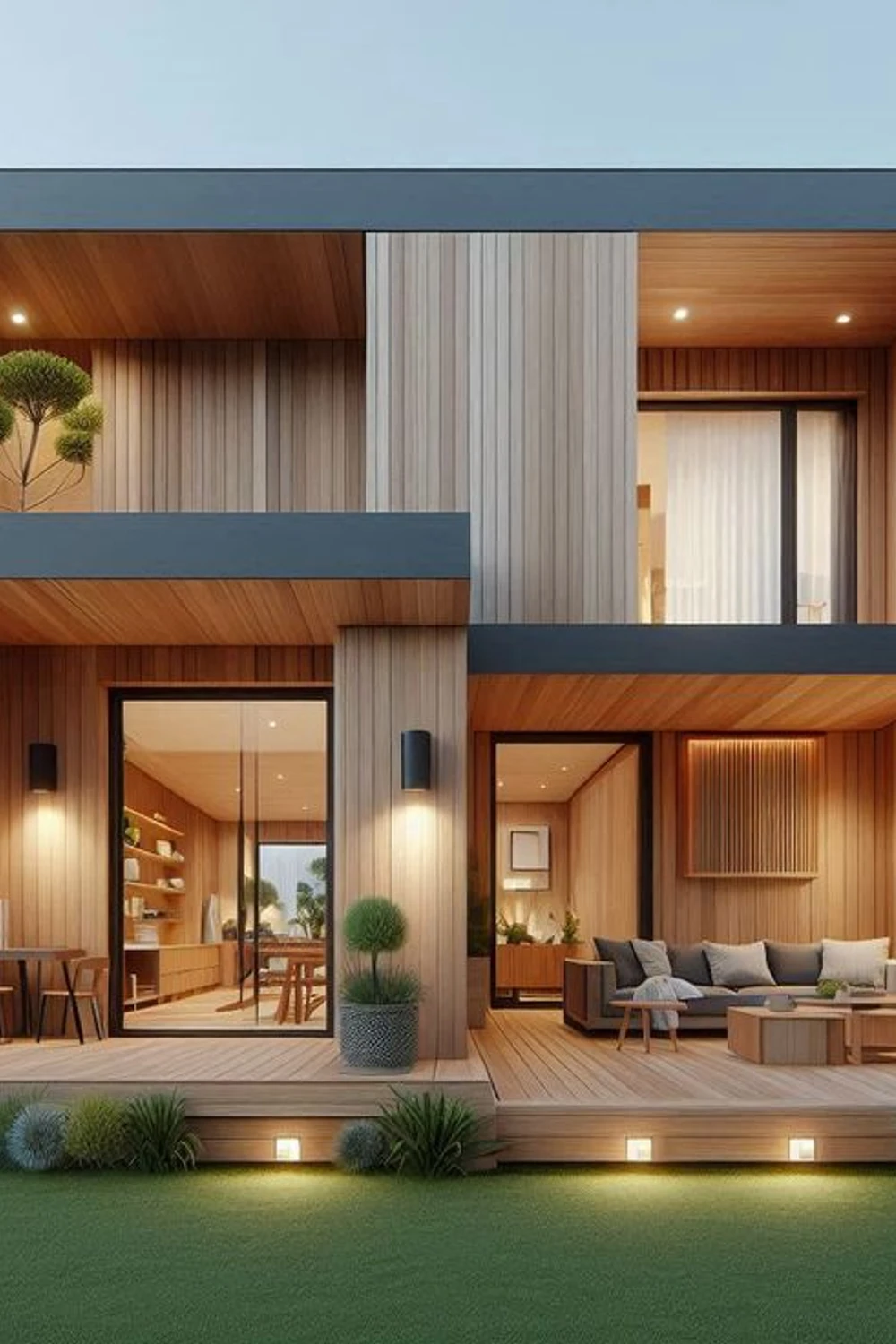
Cozy Minimalist Home with Warm Wood Tones: A Perfect Balance of Simplicity and Comfort
A minimalist home does not have to feel cold or empty. When paired with warm wood tones, natural textures, and carefully selected details, minimalist architecture can create a space that feels calm, welcoming, and deeply connected to nature. This cozy minimalist home with warm wood tones embraces the idea that less can truly be more. Instead of filling the interior with unnecessary decoration, the design focuses on clean lines, open spaces, natural materials, and thoughtful functionality. The result is a serene home where simplicity and comfort exist in perfect harmony.
Read More
Shell-Shaped Home Retreat: A Unique Tiny Home for Camping
Discover the perfect blend of nature and design with this shell-shaped tiny home, nestled in your garden. Ideal for camping enthusiasts, this unique retreat offers a cozy and imaginative space that brings the outdoors in, all while embracing a stunning and unconventional design
Read More
Ship-Inspired Bed: A Unique Bedroom Experience Inspired by the Sea
Discover ship-inspired bed designs that bring the charm of the ocean into your bedroom with wooden details, nautical colors, and creative boat-shaped frames.
Read More